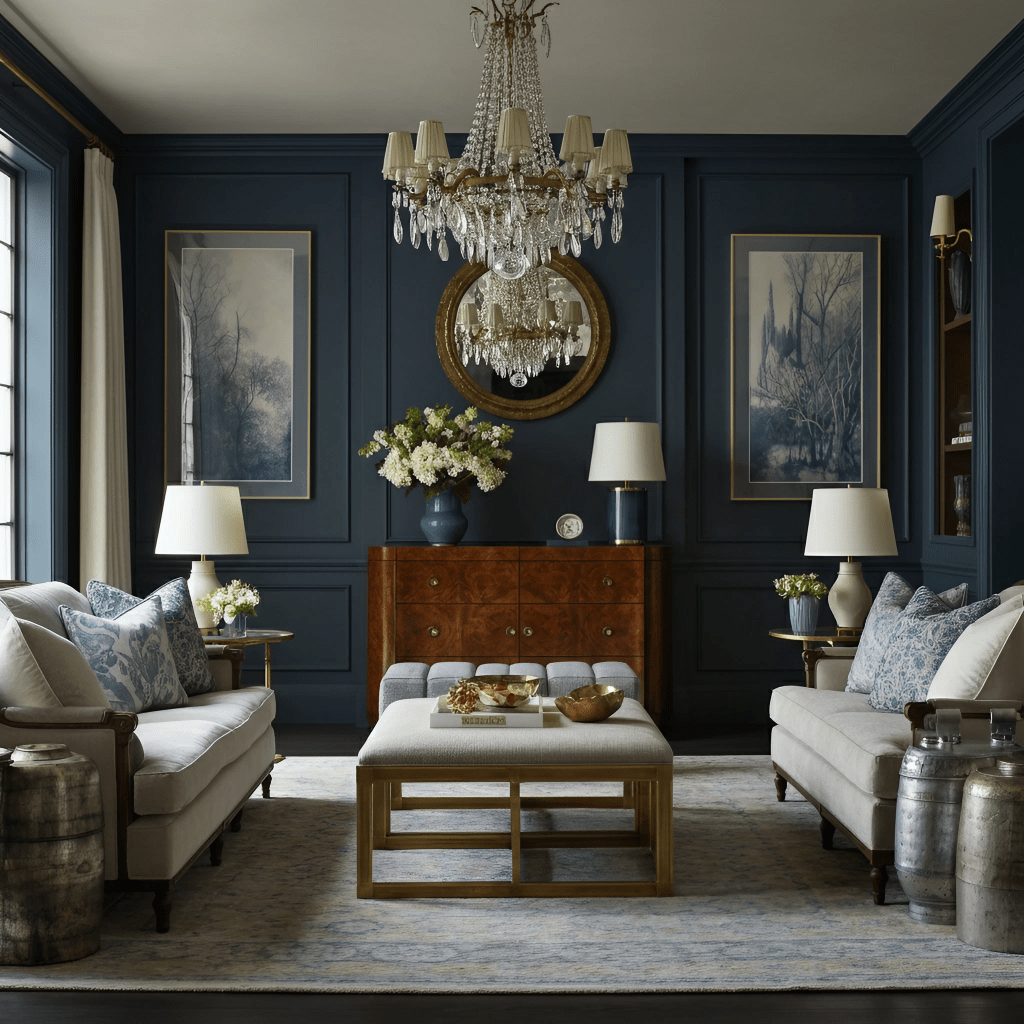
This post is a summation and analysis for the popular interior design book by Frida Ramstedt, “The Interior Design Handbook”. This post references Chapter 2: Basic Principles and Rules of Thumb.
The Odd Numbers Rule
The rule refers to using odd numbers (e. 3 of an element), to create a visually interesting space. This is also known as “The Rule of Three”, but it applies to grouping elements in 3s, 5s, 7s.
Contrast and Juxtaposition
Contrast is important for avoiding predictable spaces. It is also a great way to add more character to a design. Juxtaposition refers to mixing different design styles, surfaces, materials, etc. Create contrast by considering, what is the diametric opposite of a surface or object.
Use Styles to Balance Opposites
Combining interior design strategies is a great way to make the best of an oddly styled room. It can help balance out extreme flooring or cabinetry to create a more visually appealing space. This strategy can also help avoid costly changes like redoing the floors or walls. One trick to do this is to find a common denominator between objects. This could be a color, fabric, design style, etc. It is also important to note that we notice the distinction between light and dark more clearly than any other difference.
Examples of Opposites in Interior Design include:
- hard > soft
- straight > curved
- angular > rounded
- dark > light
- stiff > supple
- matte > glossy
- large > small
- compact > perforated
- single color > pattern
- warm > cold
- high > low
- textured > smooth
Textures & Tactile Surfaces
Lack of texture and different surface types can often be why spaces seem flat instead of interesting to look at. For this reason, it is essential to always try a mix of different surface types that offer a variety of tactile and textured surfaces.
Tactile Texture (Physical)
Tactile texture refers to a physical feel. Tactile feels can make a room feel cozy or set the tone for a workspace. Neurological connections between people and their environments are thought to beimpacted by their tactile experience in that space.
Visual Texture (Optical)
Visual texture is great for adding dimension to a room whether that be in-person or through an image. The light in a room can often impact this experiene, especially with the shadows it creates.
- Rough & Uneven Surfaces will refelct less light, making colors feel darker, more soft/warm, and will feel more rustic.
- Smooth & Shiny Surfaces will reflect colors in a way tat makes the room feel lighter, but more hard and cold. This is often seen in more modern spaces.
Symmetry (as defindee by designers)
Symmetrical compositions are great for bringing order to irregular designs or to add elegance to a space.
- Mirroran symmetry- Each side is a mirror image of the other, like butterfly wings.
- rotation symmetry- A pattern that remains unchanged when rotated around its midpoint. Designers often strive for “radial balance”
- translation symmetry- Also called parallel symmetry, it occurs when the same figure or pattern is repeated at a set distance
Asymmetry, Wabi Sabi, and Fukinsei
The balance of a space can also be controlled through asymmetry. Wabi sabi is a Japanese aesthetic and interior design concept that sees beauty in what is simple and unaffected. Fukinsei is also referred to as asymmetrical balance. These principles of asymmetry are great for making spaces look a little less polished. This can also be done by adding in elements to a space that break the typical mold of the room. For example, adding an old, patinaed chair to a super modern space. This irregular texture can be added through paintings, rugs, wallpaper, etc.
Vary the Size & Scale
Adding minor changes to the size & scale of compositions in your home gives spaces a more unique and designed feel. Ways to do this include adding a differently-size. pillows to your couch or add in a large clay pot. Think in terms of something tall, short, broad, narrow, big and small when changing up your scale.
 Learning Interior Design
Leave a comment